Credits
Every photograph on this site
Licences were checked on each source page on 18 November 2026. CC BY 4.0 stills are used on the website and credited; they are not placed in the typographic PDFs. CC BY-SA images, if any appear, are used on the website only, and are not placed in the downloadable fact sheets.
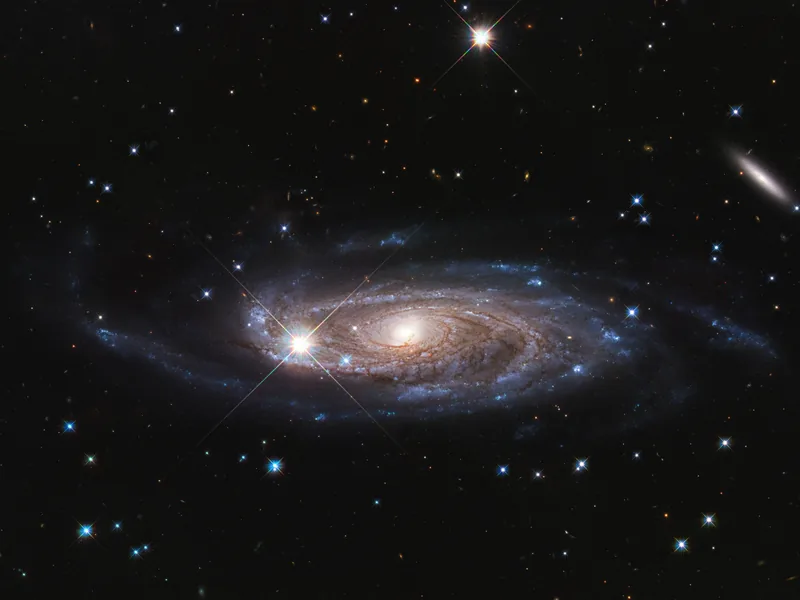
UGC 2885, a huge spiral photographed by Hubble and nicknamed Rubin’s galaxy. NASA, ESA and B. Holwerda. This is a modern space-telescope still, not one of Vera Rubin’s original observation plates. U.S. government work in the public domain. Photo: NASA, ESA and B. Holwerda · Public domain (U.S. government work) · Wikimedia Commons 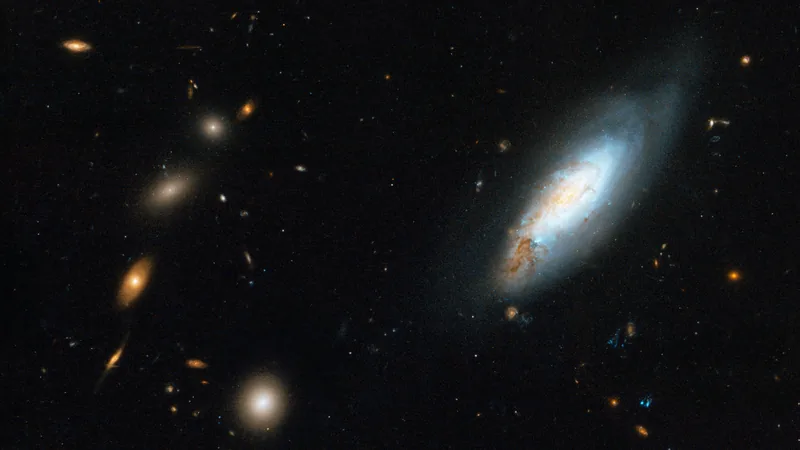
A modern Hubble close-up of galaxies in the Coma Cluster, the cluster Fritz Zwicky studied in 1933. NASA, ESA and the Hubble Heritage Team (STScI/AURA). This is not one of Zwicky’s original plates. U.S. government work in the public domain. Photo: NASA, ESA and the Hubble Heritage Team (STScI/AURA) · Public domain (U.S. government work) · Wikimedia Commons 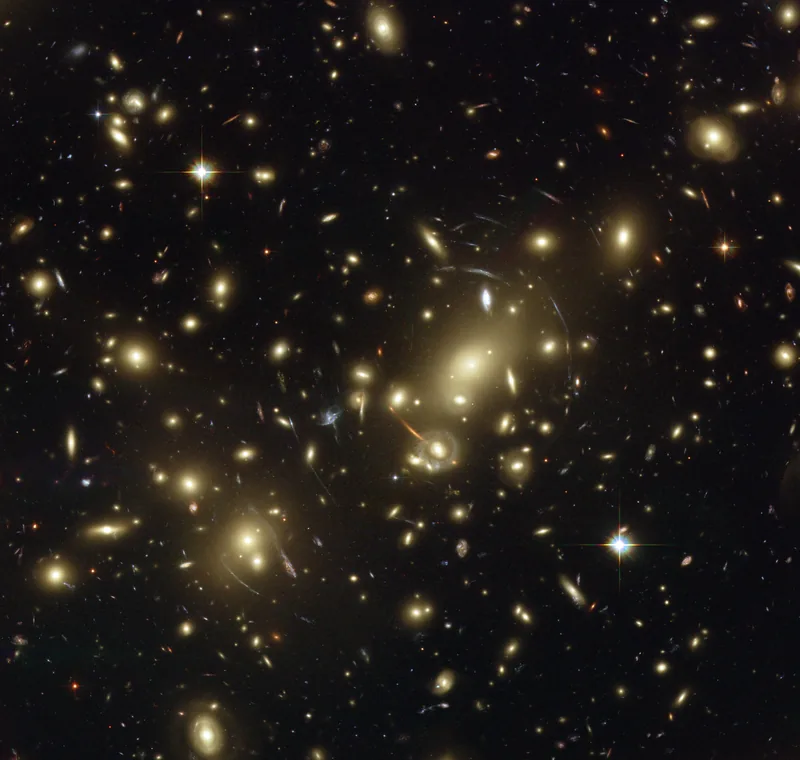
Abell 2218, a massive galaxy cluster whose gravity bends light from galaxies far behind it. NASA, ESA and Johan Richard. Official pages treat gravitational lensing as a way to map dark matter. U.S. government work in the public domain. Photo: NASA, ESA and Johan Richard (Caltech, USA) · Public domain (U.S. government work) · Wikimedia Commons 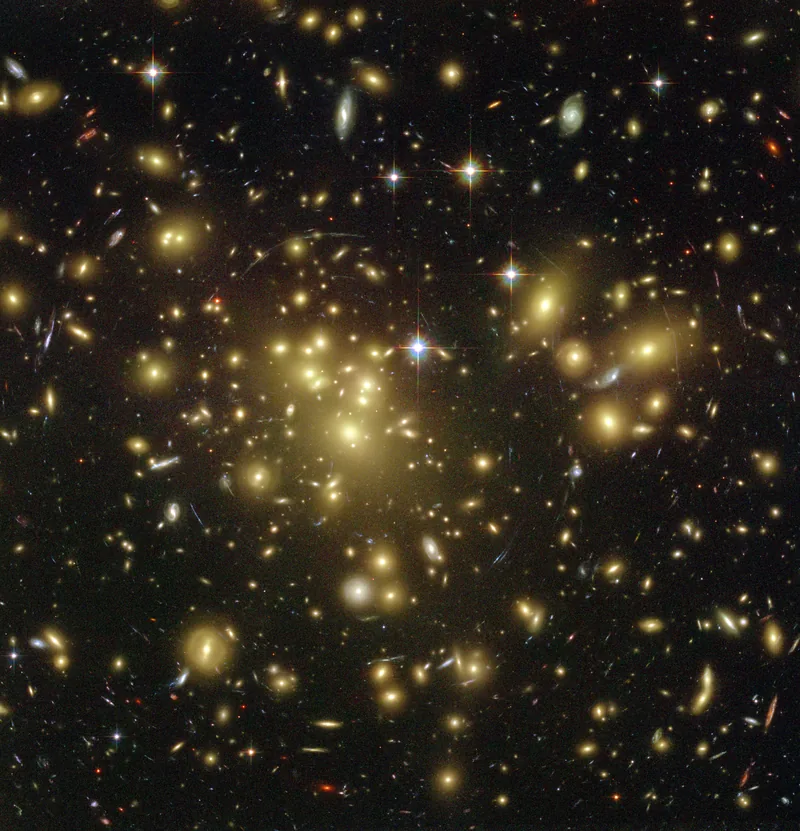
Abell 1689, a massive cluster used as a gravitational lens. NASA, ESA, N. Benitez, T. Broadhurst, H. Ford and collaborators, with the ACS Science Team and ESA. U.S. government work in the public domain. Photo: NASA, ESA, N. Benitez, T. Broadhurst, H. Ford, M. Clampin, G. Hartig, G. Illingworth, the ACS Science Team and ESA · Public domain (U.S. government work) · Wikimedia Commons 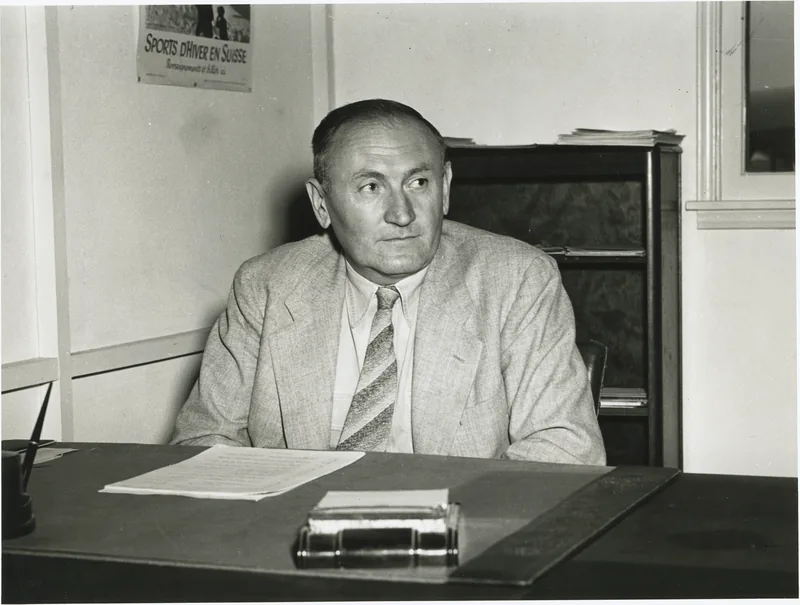
Fritz Zwicky (1898–1974). ETH-Bibliothek Zürich, Image Archive, Portr_01030. In 1933, NASA’s Dark Matter page says, he published a paper on the Coma Cluster and dubbed the missing material dunkle Materie, German for dark matter. The file is in the public domain. Photo: ETH-Bibliothek Zürich, Image Archive · Public domain · Wikimedia Commons 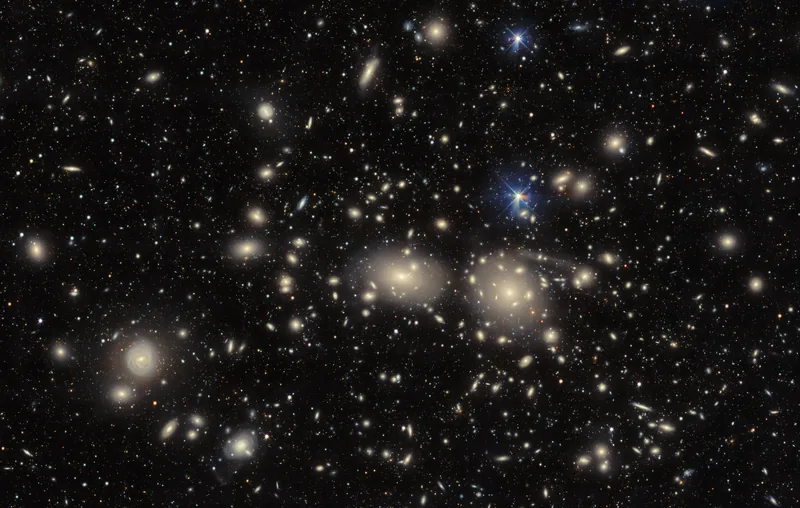
A wide modern view of the Coma Cluster, photographed for NOIRLab. CTIO/NOIRLab/DOE/NSF/AURA, D. de Martin and M. Zamani. Licensed CC BY 4.0. A contemporary landscape of the cluster Zwicky studied; not one of his plates. Photo: CTIO/NOIRLab/DOE/NSF/AURA, D. de Martin and M. Zamani · CC BY 4.0 · Wikimedia Commons 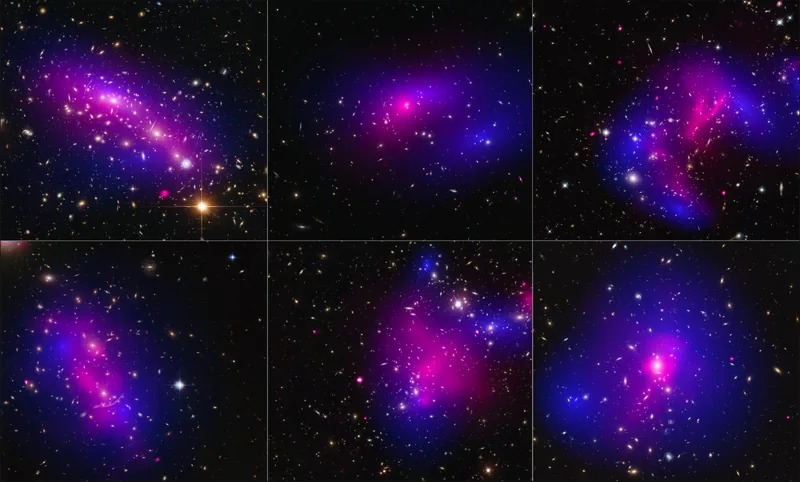
Six colliding galaxy clusters, in a NASA Goddard still (GSFC_20171208_Archive_e000752) combining Hubble visible light with Chandra X-ray data. Credit: NASA and ESA. Official pages say collisions can separate dark matter from hot gas. U.S. government work in the public domain. Photo: NASA and ESA · Public domain (U.S. government work) · NASA Images 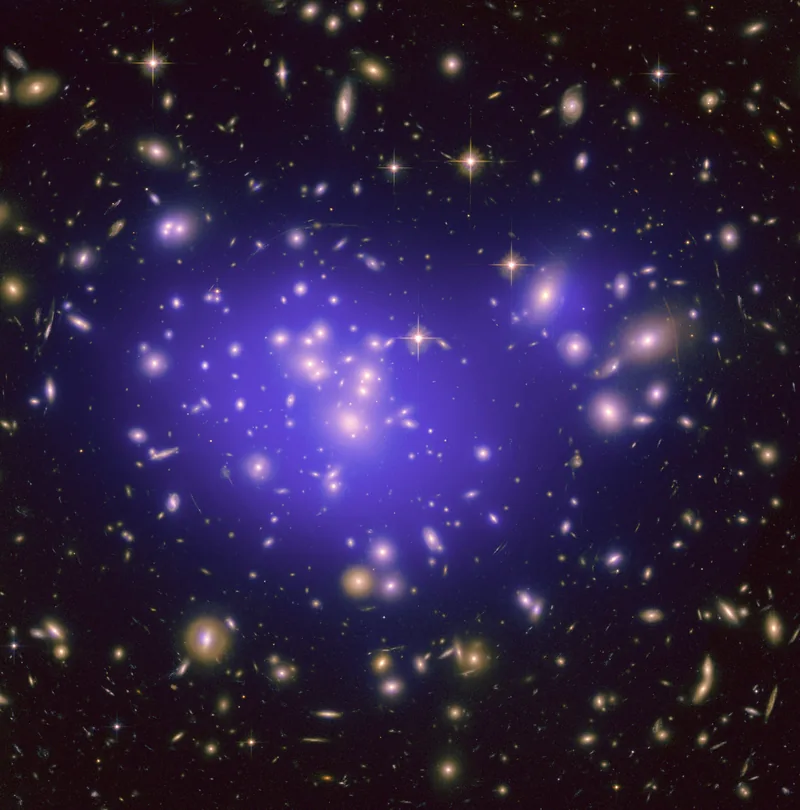
Abell 1689 with a purple overlay mapping where most of the mass must be, from a NASA Goddard still (GSFC_20171208_Archive_e001983). NASA, ESA, E. Jullo, P. Natarajan and J-P. Kneib. The overlay is a map of mass, not a colour photograph of dark matter itself. U.S. government work in the public domain. Photo: NASA, ESA, E. Jullo (JPL/LAM), P. Natarajan (Yale) and J-P. Kneib (LAM) · Public domain (U.S. government work) · NASA Images 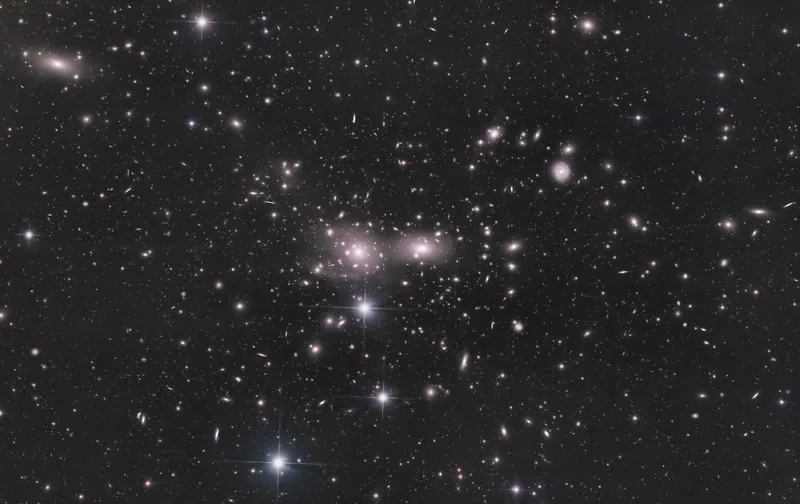
A modern amateur view of the Coma Cluster, photographed from Estonia by Taavi Niittee of the Tõrva Astronomy Club. Licensed CC BY 4.0. Another contemporary look at Zwicky’s cluster, not one of his 1930s plates. Photo: Taavi Niittee / Tõrva Astronomy Club · CC BY 4.0 · Wikimedia Commons 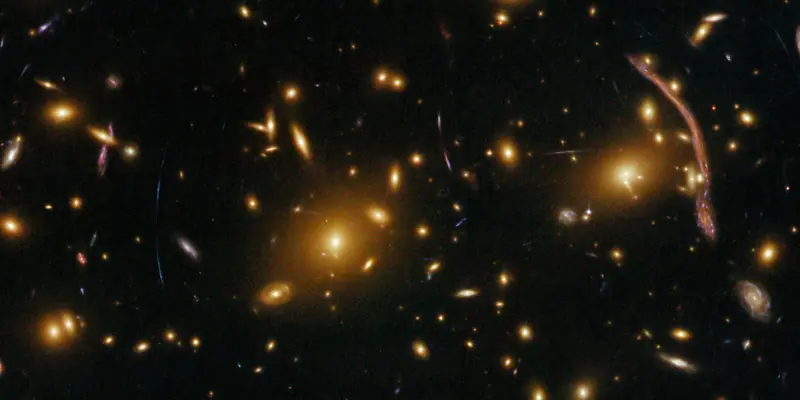
The galaxy cluster Abell 370, with golden galaxies and a long curved arc of light bent by the cluster’s gravity, photographed by NASA, ESA, the Hubble SM4 ERO Team and ST-ECF on 9 September 2009. Used in the advertising banner near the foot of the main pages. Cropped and resized; no other changes. Photo: NASA, ESA, the Hubble SM4 ERO Team and ST-ECF, 9 September 2009 · CC BY 4.0 · Wikimedia Commons
Enjoyed this dark-matter desk?
No pop-ups. No intrusive advertising. Just interesting stuff. A little support helps the next galaxies.im site get built.