dark-matter.galaxies.im
The stars that should have flown off
“Dark matter is the invisible glue that holds the universe together.” It “doesn’t absorb, reflect, or emit any light,” but “takes up space and it holds mass.” Official pages say that is how we study it: not by looking at it, but by watching what it does.[source]
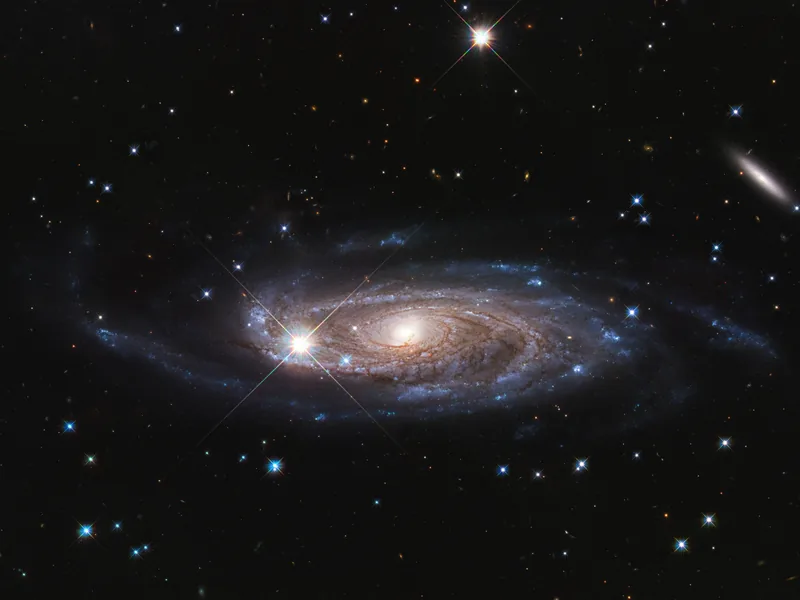
Can we see it?
Pick a story. Official pages call dark matter the invisible glue that holds the universe together. It does not absorb, reflect or emit light. We study it by what it does to the things we can see.

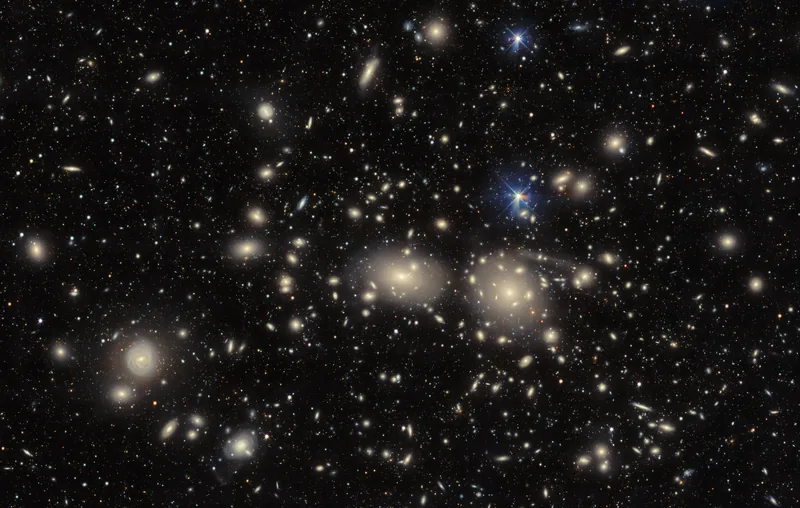
The story official pages tell starts in 1933. Fritz Zwicky, studying the Coma Cluster, found that the galaxies “moved too quickly for the gravity created by its observed ordinary matter. The galaxies should have been escaping the cluster, but instead, they were staying together.” He “dubbed this mysterious material ‘dunkle Materie,’ which is German for dark matter.” For a while it was “still seen as a fringe concept.”[source]
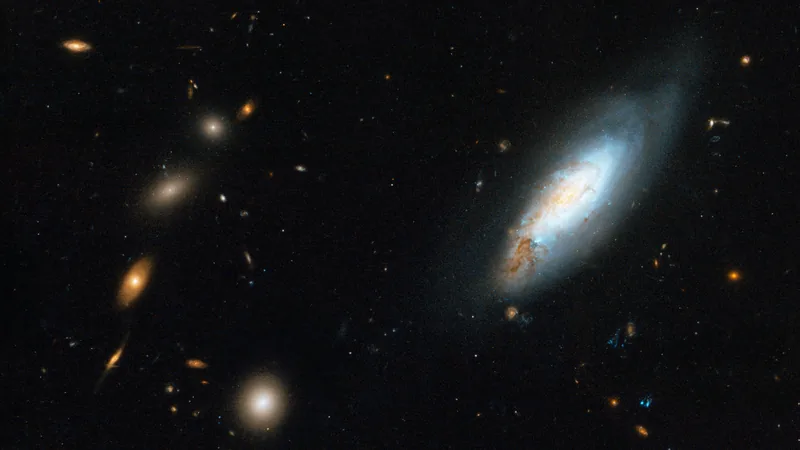
Then, in the 1970s, Vera Rubin watched the outer stars of spiral galaxies. “To explain why these stars moved as fast as they did without flying into intergalactic space, there had to be a large amount of matter holding them in place.” She concluded that the galaxies “must be held together by dark matter.” Hubble’s page later calls her the “mother of dark matter.”[source][source]
How much of the universe is this stuff? Official pages give two careful answers, and this site keeps both. NASA’s Dark Matter page says ordinary matter is “about 5%,” dark matter “about 27%,” and dark energy 68%. Hubble’s dark-matter page says dark matter is “theorized to make up 85 percent of the universe’s total mass, or almost 30 percent of the universe’s combined mass-energy.” The figures are not averaged here.[source][source]
Enjoyed this dark-matter desk?
No pop-ups. No intrusive advertising. Just interesting stuff. A little support helps the next galaxies.im site get built.